Invest in your 40s

Time is on your side!

Time is on your side!

You're in your 40s. You can retire a millionaire. Learn how with more Money School tips below.

💡Money School Lesson #1

Understanding Your Critical Window

Your 40s are unique: you're likely earning more than ever, but retirement is close enough to see. This creates what financial experts call the "compound return window" — your last chance to leverage time in the market.

The Math:

At 8% average annual returns, $1,700/month for 20 years = +$1M. Wait 5 years? Investing $1,700/month for only 15 years can lead to missed returns of +$300K. Every year you delay doesn't just cost you contributions — it costs you all the compound growth those contributions could have generated.†


💡Money School Lesson #1

Understanding Your Critical Window

Your 40s are unique: you're likely earning more than ever, but retirement is close enough to see. This creates what financial experts call the "compound return window" — your last chance to leverage time in the market.

The Math:

At 8% average annual returns, $1,700/month for 20 years = +$1M. Wait 5 years? Investing $1,700/month for only 15 years can lead to missed returns of +$300K. Every year you delay doesn't just cost you contributions — it costs you all the compound growth those contributions could have generated.†


💡Money School Lesson #1
Understanding Your Critical Window

Your 40s are unique: you're likely earning more than ever, but retirement is close enough to see. This creates what financial experts call the "compound return window" — your last chance to leverage time in the market.

The Math:

At 8% average annual returns, $1,700/month for 20 years = +$1M. Wait 5 years? Investing $1,700/month for only 15 years can lead to missed returns of +$300K. Every year you delay doesn't just cost you contributions — it costs you all the compound growth those contributions could have generated.†


Co-owned by Mr. Wonderful Kevin O'Leary

"Your 40s are when you should be maximizing savings. You're earning more than ever, but retirement is getting real. The key is aggressive consistency — invest like your future depends on it, because it does."

— Kevin O'Leary, Chairman & Co-owner, Beanstox

💡Money School Lesson #2

The Power of Compound Returns†

Albert Einstein called it "the eighth wonder of the world." Here's why compound returns are your most powerful wealth-building tool in your 40s:


+$1M

What $1,700/month becomes by 65, if you start at age 45

Your contributions: $408K. Compound growth: +$592K

60%

Of your final balance is compound growth

You contribute 40%, the market does 60%

+$300K

Cost of waiting just 5 years

Starting at 50 vs 45 can mean losing +$300K in potential growth when investing $1,700/month at 8% until 65*


Key Takeaway:

Your money makes money, and that money makes more money. With 20 years ahead (assuming 45 to 65), $1,700/month could turn into over $1M not because you saved $1M (you only put in $408K), but because your money worked for you through compound growth. That's why starting now, even in your 40s, is still incredibly powerful.


Key Takeaway:

Your money makes money, and that money makes more money. With 20 years ahead (assuming 45 to 65), $1,700/month could turn into over $1M not because you saved $1M (you only put in $408K), but because your money worked for you through compound growth. That's why starting now, even in your 40s, is still incredibly powerful.


The 3-Step Wealth-Building System

Forget stock picking and market timing. Here's a simple system to build wealth over time:

Woman writing financial goals in a notebook
01
Assess where you are vs. where you need to be

Most people in their 40s have no idea if they're on track. Answer questions about your current savings, investment goals, and risk tolerance. Get a personalized portfolio.

📚 Lesson: Financial clarity is the first step to financial freedom

Woman using a phone for automatic investing
02
Automate $1,700/month minimum

Set it and forget it. Money moves automatically into your investment account every month. This is called 'dollar-cost averaging' — you buy more shares when prices are low, fewer when high. Over 20 years, this tends to smooth out market volatility and eliminates emotional decisions.

📚 Lesson: Automation removes emotion from investing

Woman using a phone for automatic investing
02
Automate $1,700/month minimum

Set it and forget it. Money moves automatically into your investment account every month. This is called 'dollar-cost averaging' — you buy more shares when prices are low, fewer when high. Over 20 years, this tends to smooth out market volatility and eliminates emotional decisions.

📚 Lesson: Automation removes emotion from investing

Woman looking confidently toward her financial future
03
Stay invested through market swings

You'll see ups and downs. Don't panic sell. With 15-25 years until retirement, short-term dips can be buying opportunities. Historically, the S&P 500 has never had a negative 20-year period. We rebalance everything — you just stay the course.

📚 Lesson: Time in the market beats timing the market


⚡ Pro Tip:

The biggest investing mistake isn't picking the wrong stocks — it's not investing at all. Studies show that 90% of investment success comes from asset allocation (being invested in the market), not stock selection. This system keeps you invested, diversified, and growing wealth automatically.


⚡ Pro Tip:

The biggest investing mistake isn't picking the wrong stocks — it's not investing at all. Studies show that 90% of investment success comes from asset allocation (being invested in the market), not stock selection. This system keeps you invested, diversified, and growing wealth automatically.


📖 Money School Lesson #4

Financial Concepts Every 40-Something Should Know

Understanding these fundamentals will help you make better financial decisions for the next 20+ years.

Asset Allocation

How you divide investments between stocks, bonds, and cash. In your 40s, most experts recommend 70-80% stocks for growth, 20-30% bonds for stability.

Why it matters: Proper allocation balances growth potential with risk management as you approach retirement.

Dollar-Cost Averaging

Investing the same amount regularly regardless of market conditions. $1,700 every month, whether the market is up or down.

Why it matters: Removes emotion from investing and naturally buys more shares when prices are low, fewer when high.

Tax-Advantaged Accounts

401(k), IRA, and HSA accounts that reduce your tax bill while building retirement wealth. Max them out first.

Why it matters: For every $100 you contribute to a Traditional IRA (available in Beanstox) you can boost your federal tax refund by up to $22. That's free money.**

Diversification

Spreading investments across many companies and sectors so one bad performer doesn't sink your portfolio.

Why it matters: For example, the S&P 500 index holds 500 companies. If 50 fail, you still own 450. Individual stocks? Much riskier.

Rebalancing

Periodically adjusting your portfolio back to target allocation. If stocks boom to 90%, investors sometimes sell some and buy bonds.

Why it matters: Forces you to 'sell high, buy low' automatically, maintaining your desired risk level.

📖 Money School Lesson #4

Financial Concepts Every 40-Something Should Know

Understanding these fundamentals will help you make better financial decisions for the next 20+ years.

Asset Allocation

How you divide investments between stocks, bonds, and cash. In your 40s, most experts recommend 70-80% stocks for growth, 20-30% bonds for stability.

Why it matters: Proper allocation balances growth potential with risk management as you approach retirement.

Dollar-Cost Averaging

Investing the same amount regularly regardless of market conditions. $1,700 every month, whether the market is up or down.

Why it matters: Removes emotion from investing and naturally buys more shares when prices are low, fewer when high.

Tax-Advantaged Accounts

401(k), IRA, and HSA accounts that reduce your tax bill while building retirement wealth. Max them out first.

Why it matters: For every $100 you contribute to a Traditional IRA (available in Beanstox) you can boost your federal tax refund by up to $22. That's free money.**

Diversification

Spreading investments across many companies and sectors so one bad performer doesn't sink your portfolio.

Why it matters: For example, the S&P 500 index holds 500 companies. If 50 fail, you still own 450. Individual stocks? Much riskier.

Rebalancing

Periodically adjusting your portfolio back to target allocation. If stocks boom to 90%, investors sometimes sell some and buy bonds.

Why it matters: Forces you to 'sell high, buy low' automatically, maintaining your desired risk level.

5 Costly Mistakes to Avoid in Your 40s

Learn from others' mistakes. Each of these errors can cost you six figures in lost retirement wealth.

Thinking 'I'll catch up later'

Later is now. You have 20 years to retirement. Every month you delay means you need to invest significantly more. Start aggressively today — there's no more time to wait.

💸 The Real Cost: Waiting 5 years can cost you +$300K in lost compound returns.*

✅ The Fix: Start with whatever you can today, even $500/month. Increase it with every pay raise.

Still carrying high-interest debt

Credit cards at 20% interest will destroy your retirement plans. Pay off high-interest debt first, then redirect those payments into investments. Your future self needs this money working for you, not against you.

💸 The Real Cost: $10K in credit card debt at 20% APR costs you $2K/year in interest alone.

✅ The Fix: Attack debt aggressively. Once paid off, invest that payment amount immediately.

Not maxing out retirement accounts

401(k) match is free money. HSAs are triple tax-advantaged. If you're not maxing these out in your 40s, you're leaving thousands on the table. Do whatever it takes to get these maxed.

💸 The Real Cost: Skipping a 50% employer match on $10K = giving away $5K/year in free money.

✅ The Fix: Contribute at least enough to get full employer match, then increase each year.

Keeping too much in 'safe' investments

You still have 20 years. Being too conservative now could mean missing crucial growth. Consider a more aggressive growth if you can in your 40s to make up for lost time. Risk-appropriate doesn't mean risk-free.

💸 The Real Cost: 6% returns vs 8% on $1,700/month = $200K less at retirement.*

✅ The Fix: You could aim for 70-80% stocks, 20-30% bonds. Adjust as you near retirement.

Trying to get rich quick

You're earning more than ever — but are you saving more? Every raise should increase your investment amount. Live on last year's salary, invest this year's raise. That's how you could retire comfortably.

💸 The Real Cost: A $10K raise invested at 8% for 20 years = $49K. Spent? $0.

✅ The Fix: When you get a raise, immediately increase your IRA and 401(k) contribution by the allowed amount.

5 Costly Mistakes to Avoid in Your 40s

Learn from others' mistakes. Each of these errors can cost you six figures in lost retirement wealth.

Thinking 'I'll catch up later'

Later is now. You have 20 years to retirement. Every month you delay means you need to invest significantly more. Start aggressively today — there's no more time to wait.

💸 The Real Cost: Waiting 5 years can cost you +$300K in lost compound returns.*

✅ The Fix: Start with whatever you can today, even $500/month. Increase it with every pay raise.

Still carrying high-interest debt

Credit cards at 20% interest will destroy your retirement plans. Pay off high-interest debt first, then redirect those payments into investments. Your future self needs this money working for you, not against you.

💸 The Real Cost: $10K in credit card debt at 20% APR costs you $2K/year in interest alone.

✅ The Fix: Attack debt aggressively. Once paid off, invest that payment amount immediately.

Not maxing out retirement accounts

401(k) match is free money. HSAs are triple tax-advantaged. If you're not maxing these out in your 40s, you're leaving thousands on the table. Do whatever it takes to get these maxed.

💸 The Real Cost: Skipping a 50% employer match on $10K = giving away $5K/year in free money.

✅ The Fix: Contribute at least enough to get full employer match, then increase each year.

Keeping too much in 'safe' investments

You still have 20 years. Being too conservative now could mean missing crucial growth. Consider a more aggressive growth if you can in your 40s to make up for lost time. Risk-appropriate doesn't mean risk-free.

💸 The Real Cost: 6% returns vs 8% on $1,700/month = $200K less at retirement.*

✅ The Fix: You could aim for 70-80% stocks, 20-30% bonds. Adjust as you near retirement.

Trying to get rich quick

You're earning more than ever — but are you saving more? Every raise should increase your investment amount. Live on last year's salary, invest this year's raise. That's how you could retire comfortably.

💸 The Real Cost: A $10K raise invested at 8% for 20 years = $49K. Spent? $0.

✅ The Fix: When you get a raise, immediately increase your IRA and 401(k) contribution by the allowed amount.

Your Questions, Answered

Real questions from people in their 40s, with educational answers backed by financial principles. Is it too late to start investing in my 40s?

Is it too late to start investing in my 40s?
What if I'm 48? Can I still build a retirement fund?
Can I retire before 65?
How much should I have saved by age 45?

7,212 people are already on the list
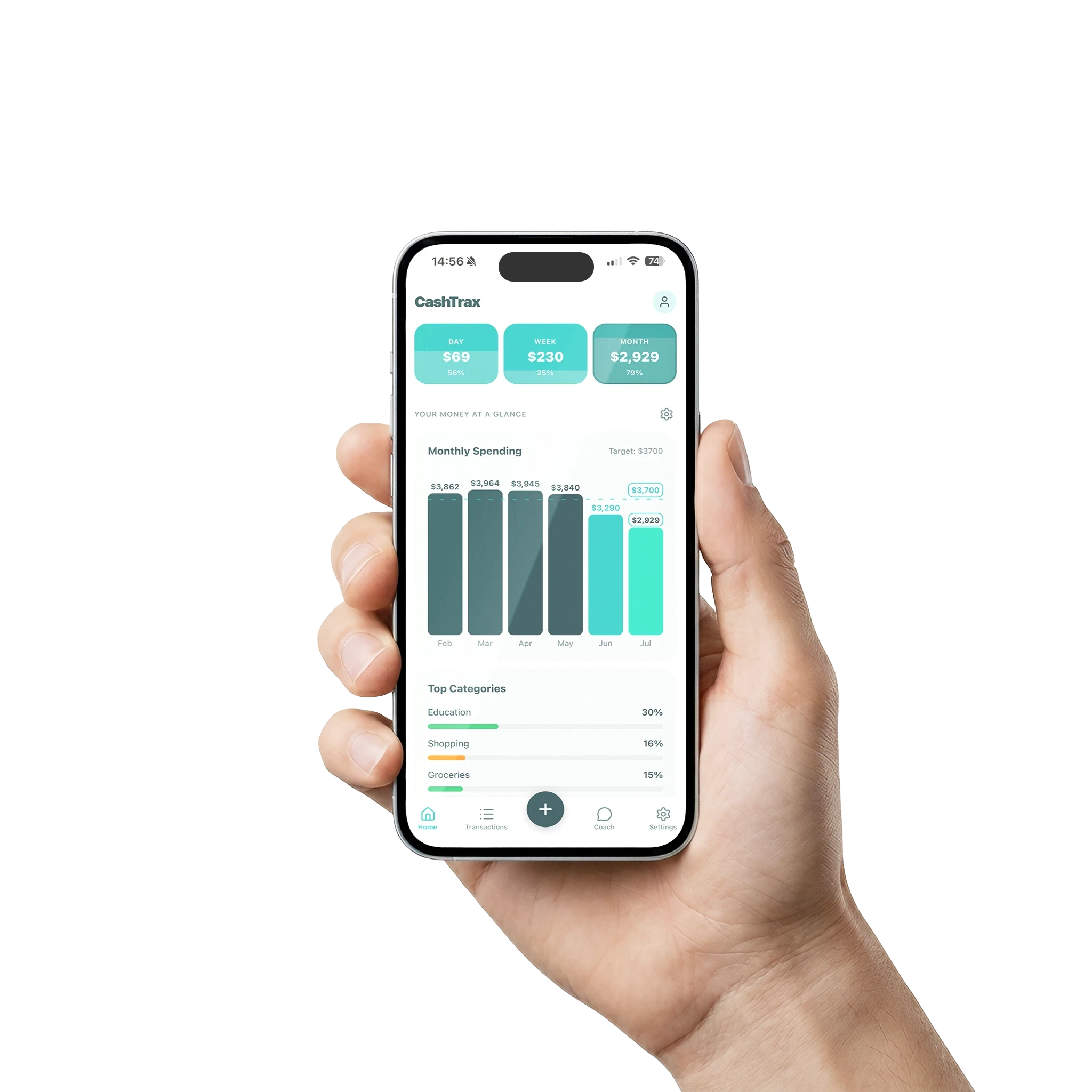
Get cashtrax early and watch your goals become reality

Get cashtrax early and watch your goals become reality

Founding clients get early beta access and a say in what gets built next.

Founding clients get early beta access and a say in what gets built next.

Join the waitlist for priority access

Beanstox Investments Inc. dba cashtrax ("cashtrax") does not provide investment, tax, legal, accounting, credit score, or banking advice. The information provided is for informational purposes only and is not intended to constitute such advice. Readers and App users are encouraged to consult with their personal tax, legal, and accounting professionals for specific guidance.

AI: cashtrax uses artificial intelligence ("AI") to generate material information communicated to users of the App and the Website. Because generative AI produces responses based on vast data inputs and lacks critical thinking, cashtrax can't guarantee factual accuracy and may produce content that's incorrect or misleading. You should do your own research to complement, or verify the accuracy of, AI generated information.

* Plaid Technologies, Inc. ("Plaid") collects information (“Account Information”) about you and your accounts from you and from your financial institutions when you connect an account to cashtrax. By connecting your accounts, you let cashtrax and Plaid securely access and transmit your Account Information on your behalf. cashtrax connects to your accounts on a read-only basis to analyze your spending and help you manage your money. The Account Information accessed may include account balances and transactions from those institutions. cashtrax does not move, transfer, hold, or otherwise handle your funds. You acknowledge and agree that the Account Information you provide to Plaid through cashtrax will be treated by Plaid in accordance with Plaid's privacy policy, available at https://plaid.com/legal/. By choosing to link your financial institution account, you expressly authorize and direct cashtrax and Plaid, on your behalf, to electronically retrieve your Account Information.

ⓒ 2026 cashtrax · Privacy-first by design

  • cashtrax

  • —

Beanstox Investments Inc. dba cashtrax ("cashtrax") does not provide investment, tax, legal, accounting, credit score, or banking advice. The information provided is for informational purposes only and is not intended to constitute such advice. Readers and App users are encouraged to consult with their personal tax, legal, and accounting professionals for specific guidance.

AI: cashtrax uses artificial intelligence ("AI") to generate material information communicated to users of the App and the Website. Because generative AI produces responses based on vast data inputs and lacks critical thinking, cashtrax can't guarantee factual accuracy and may produce content that's incorrect or misleading. You should do your own research to complement, or verify the accuracy of, AI generated information.

* Plaid Technologies, Inc. ("Plaid") collects information (“Account Information”) about you and your accounts from you and from your financial institutions when you connect an account to cashtrax. By connecting your accounts, you let cashtrax and Plaid securely access and transmit your Account Information on your behalf. cashtrax connects to your accounts on a read-only basis to analyze your spending and help you manage your money. The Account Information accessed may include account balances and transactions from those institutions. cashtrax does not move, transfer, hold, or otherwise handle your funds. You acknowledge and agree that the Account Information you provide to Plaid through cashtrax will be treated by Plaid in accordance with Plaid's privacy policy, available at https://plaid.com/legal/. By choosing to link your financial institution account, you expressly authorize and direct cashtrax and Plaid, on your behalf, to electronically retrieve your Account Information.

ⓒ 2026 cashtrax · Privacy-first by design

  • cashtrax

  • —

Beanstox Investments Inc. dba cashtrax ("cashtrax") does not provide investment, tax, legal, accounting, credit score, or banking advice. The information provided is for informational purposes only and is not intended to constitute such advice. Readers and App users are encouraged to consult with their personal tax, legal, and accounting professionals for specific guidance.

AI: cashtrax uses artificial intelligence ("AI") to generate material information communicated to users of the App and the Website. Because generative AI produces responses based on vast data inputs and lacks critical thinking, cashtrax can't guarantee factual accuracy and may produce content that's incorrect or misleading. You should do your own research to complement, or verify the accuracy of, AI generated information.

* Plaid Technologies, Inc. ("Plaid") collects information (“Account Information”) about you and your accounts from you and from your financial institutions when you connect an account to cashtrax. By connecting your accounts, you let cashtrax and Plaid securely access and transmit your Account Information on your behalf. cashtrax connects to your accounts on a read-only basis to analyze your spending and help you manage your money. The Account Information accessed may include account balances and transactions from those institutions. cashtrax does not move, transfer, hold, or otherwise handle your funds. You acknowledge and agree that the Account Information you provide to Plaid through cashtrax will be treated by Plaid in accordance with Plaid's privacy policy, available at https://plaid.com/legal/. By choosing to link your financial institution account, you expressly authorize and direct cashtrax and Plaid, on your behalf, to electronically retrieve your Account Information.

ⓒ 2026 cashtrax · Privacy-first by design

  • cashtrax

  • —